I Accidentally Designed an Unwinnable Boss Fight
Watch or listen to this blog post here.
My Shadowdark group had been absolutely mopping the floor with most of the enemies I threw at them. Adventure after adventure, they were moving through encounters with very little resistance, and that bothered me because this is Shadowdark. It is supposed to be gritty, challenging, and dangerous. Death is supposed to feel like it might be right around the corner.
So, I decided it was time to up the ante.
I had already thrown some nasty creatures at them, including spellcasters that could sling fireball every round, but nothing seemed to faze the group. Part of the problem may have been healing. In Shadowdark, you do not lose a spell unless you fail the spellcasting check, which means a character can potentially cast cure wounds or mass cure wounds over and over. Add luck tokens for rerolls and multiple characters capable of healing, and suddenly the game can have a whole lot more healing than the word “gritty” might suggest.
That abundance of healing changes how encounters feel. If the group can keep bouncing back from damage, the game master naturally starts throwing harder enemies at them. Then the players lean even more heavily into healing, and before long you have an arms race between encounter difficulty and recovery.
This is actually one reason the system I am designing, No Quarter, has no healing at all. Part of that decision comes from the fact that healing has proven difficult to balance with the health and wound mechanics I am using, but I also like the idea that nobody has to become the mandatory healing robot who spends every fight restoring everyone else’s hit points.
Anyway, back to Shadowdark.
How Shadowdark Builds Encounters
Before I explain how badly this fight went, a little context about Shadowdark encounter design is important.
The core rules provide rough guidelines for determining how many monsters of what level constitute an average combat. What exactly “average” means is left somewhat open to interpretation, but I read it as something that should threaten the characters without being overwhelmingly difficult. That also means the characters should theoretically be able to handle something tougher than average, especially if they have access to a large amount of healing.
The encounter guidelines also warn that large groups of monsters may be more dangerous than their combined levels suggest because of action economy. That makes perfect sense. Anyone who has run D&D or similar games has seen what happens when one side simply gets far more actions than the other.
The rules also warn about the opposite problem. A single high-level monster may actually be too easy because an entire party can surround it and beat the crap out of it before it gets enough actions to fight back.
Again, makes sense.
Up until this point, I had mostly been throwing groups of lower-level monsters at my players, usually somewhere around one enemy per character. That seems to be what the rules encourage, and it is generally a solid approach in games like D&D 5e and Pathfinder 2e.
But this was Shadowdark, and what I had been doing clearly was not challenging this group enough. It was time to try something different.
One Level 18 Monster Against Six Level 5 Characters
I had six level 5 characters. According to the encounter guidelines, they could handle monsters with a combined total of around 18 levels. That could mean six level 3 monsters, three level 6 monsters, or one level 18 monster.
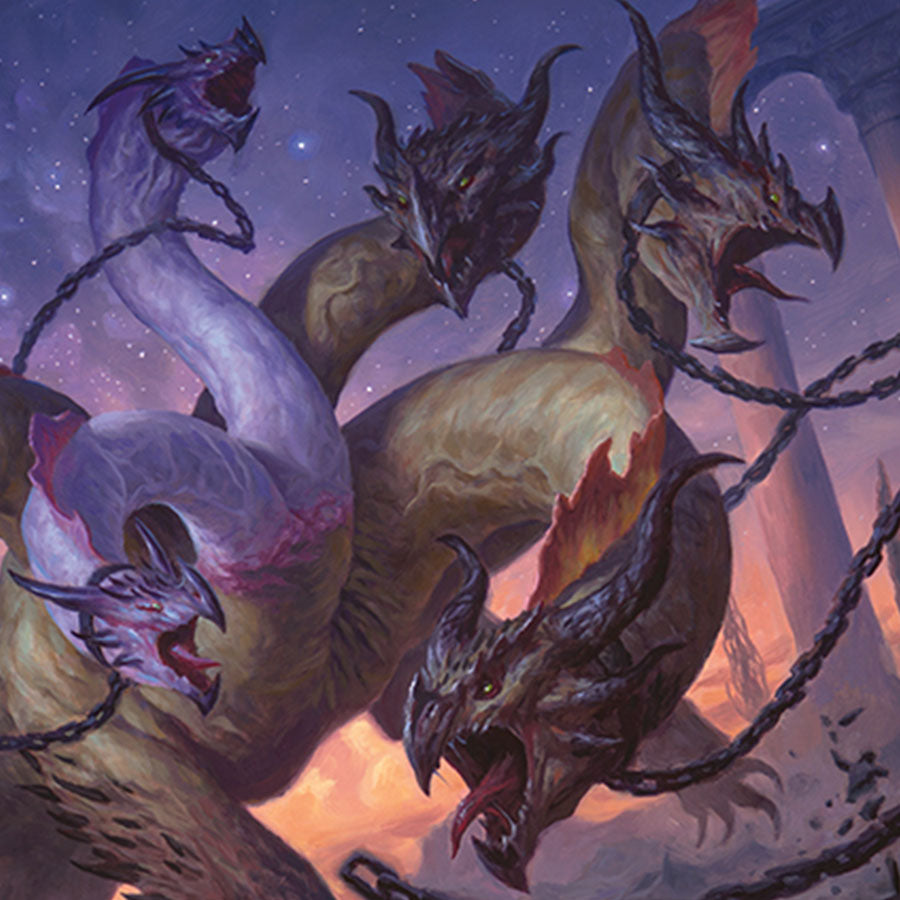
I chose the ten-eyed oracle, Shadowdark’s version of the classic beholder. For simplicity, I am just going to call it a beholder from here on out.
The thing was level 18, which made it look like the perfect boss monster for the adventure. At least, that is what I thought.
The players headed into the dungeon and immediately started burning resources at a rate that concerned me. Lightning bolts and other powerful abilities came out during what was basically a pathetic mook fight. Luck tokens were getting spent. They were depleting resources much faster than normal, so by the time they reached the final boss, I was already thinking they might be in trouble.
And then I looked at the beholder and had the exact opposite thought.
“They are going to surround and pound this thing. Maybe I should give it more hit points.”
I decided not to. Better to see how it actually played before I started changing numbers.
That turned out to be a good decision, just not for the reason I expected.
Then the Beholder Took Its Turn
I rolled initiative like an absolute champion and the beholder went dead last.
Every single player got to attack before it acted, and they barely scratched it. The creature had an Armor Class of 18, and because it was legendary, spells required a DC 18 casting check against it. In Shadowdark, an 18 is extremely high, so the players suddenly discovered that this thing was nearly untouchable.
Then the beholder finally acted and rolled only two eye rays. I do not remember exactly what they were, though I think one character got put to sleep. Overall, it was a mediocre turn, and for a moment I thought maybe everything was going to be okay.
The next round went similarly for the players. They attacked, struggled to hit, and accomplished very little.
Then the beholder acted again.
This time I rolled six eye rays, and the fight completely changed. Paralyze, polymorph, disintegrate, death. Those eye rays effectively removed four of the six characters from the fight in a single round.
My immediate reaction was basically, “Crap. What have I done?”
There are death spirals, and then there are DEATH SPIRALS.
I Don’t Mind TPKs, But This Felt Different
We played through another couple rounds, but by that point the outcome was obvious. The characters were done.
My game master brain immediately went into overdrive because I wanted the fight to be challenging, but I had never wanted a total party kill. TPKs usually are not fun for me, and they usually are not fun for the players either.
That does not mean I refuse to allow them. I think TPKs have a place in the game. If the players make terrible choices, the dice turn against them, or they knowingly take on something far beyond their ability, then failure needs to be possible. If there are no real stakes and no consequences, player agency starts to feel hollow.
A prewritten story where the heroes always win regardless of what they do is not especially satisfying.
But this fight did not feel like that.
This did not feel like the party fighting heroically for five rounds, gradually losing ground, and finally going down in glory. It felt like a game master screw job.
You know what I mean.
You have a magic sword that is too powerful, so a red dragon suddenly swoops out of the sky, takes it, and flies away. You think your character is invincible, so rocks fall and you die.
Those moments suck because the players never really had a chance.
And that is what this beholder fight felt like.
The Players Never Really Had a Chance
The party had burned some resources before reaching the boss, sure, but I do not think that was the deciding factor. Even if they had arrived fully loaded, the beholder hit incredibly hard and was extremely difficult to affect.
Its defensive numbers were brutal, and its eye rays had save DCs of 15, which is extremely high in Shadowdark because the game uses even tighter bounded accuracy than D&D 5e.
More importantly, many of its abilities did something I hate as both a game master and a player: they removed people from the game.
Paralysis, polymorph, disintegration, sleep, and similar effects can turn a failed roll into, “Congratulations, you do not get to play anymore.”
I hate that.
It is one of the reasons I dislike things like counterspell. The wizard tries to do something, someone uses counterspell, and now the wizard does not get to play the game. The same applies to effects that paralyze, banish, trap characters behind walls of force, or otherwise prevent them from participating.
Some people will say, “That is just part of the game. Deal with it.”
Sure. It can be part of the game if you want it to be.
I usually do not.
Why I Used the Beholder Anyway
So why did I use the thing?
Because I did not review the stat block before the session.
I saw an iconic fantasy monster, thought “beholder, cool,” noticed that it was level 18, and figured it would make a perfect boss fight. Then I moved on.
I do not say that as an excuse. The fact is that I am extremely busy. I run a business, make YouTube videos, publish books, write blog posts, run multiple RPG campaigns, and have a family. Time is the one resource I never seem to have enough of, and sometimes that lack of time kicks me in the teeth.
This was one of those times.
If I had taken five minutes to really review the stat block, I probably would have seen the warning signs. I could have changed the eye rays, lowered some DCs, removed the worst save-or-you-don’t-play effects, or redesigned the encounter around the creature instead of just dropping it into the adventure as written.
But I did not, and now I was paying the price.
That kind of thing is going to happen to everyone from time to time. You cannot do 100 percent of everything 100 percent perfectly. Most of us perform some version of the 80/20 analysis whether we realize it or not. We know which things produce most of the results, so we make sure those get done well, and then we do the best we can with everything else.
Sometimes one of those other things bites you.

Want to Make Better Calls Behind the Screen?
Game mastering is full of moments like this. You misjudge an encounter, overlook an ability, improvise under pressure, or realize halfway through a session that something is not working the way you expected.
The Secret Art of Game Mastery is packed with practical advice for handling those situations better. It covers preparation, encounter design, pacing, improvisation, player management, and the countless judgment calls that separate a decent session from a great one.
If you want to sharpen your instincts behind the screen and become a better game master, check out The Secret Art of Game Mastery.
Every RPG Handles Solo Bosses Differently
There was another factor working against me here: experience from one game does not always transfer cleanly to another.
After a decade of running D&D 5e, I know that a single boss monster can get absolutely demolished by a party of lower-level characters. Action economy is brutal, and bounded accuracy means even lower-level characters still have a reasonable chance of hitting a powerful monster. A high-CR creature may look terrifying on paper and then get surrounded and deleted in two rounds.
When I took that same mentality into Pathfinder 2e, I got a rude awakening.
Because Pathfinder 2e does not use bounded accuracy the same way, a high-level solo boss against lower-level characters can become nearly invincible. Its Armor Class is too high, its attack bonuses are enormous, and the damage output can be ridiculous compared to what the party can handle.
That means boss encounter design in Pathfinder 2e requires a completely different mindset than boss encounter design in D&D 5e.
So, what should I have expected in Shadowdark?
Honestly, I trusted the core rules. The rules suggested that a high-level solo monster might be too easy, not too hard. In this case, that advice did not line up with what actually happened.
Now, this is one example. Maybe the beholder was an outlier. Maybe a different level 18 monster would have worked beautifully. I had never tried this sort of encounter before, so I gave it a shot.
And we all learned something.
I Stopped the Fight
At around round four, I basically stopped the combat and talked to the players.
That is something I almost never do. Usually I keep the machinery behind the screen hidden and let the game play out. But in this case, the encounter felt so badly misjudged that I wanted to be transparent about what had happened.
I cared about whether the players were having fun, and I suspected they were enjoying the encounter about as much as I was, which is to say not very much.
We spent a good half hour talking about the boss fight, the encounter math, the beholder’s abilities, and why things had gone so wrong. I admitted that I had not properly reviewed the creature beforehand and that, in hindsight, I would have changed quite a few things.
Then I did something else I almost never do.
I offered them a mulligan.
I was completely willing to wind the fight back, redesign the encounter, and let them try again. I cannot remember ever doing that before, which probably tells you just how badly I thought the fight had gone.
My Players Came Up with a Better Solution
The players did not want a complete reset.
Instead, they proposed a compromise that fit the fiction of the campaign. The Riftspawn were already corrupting people and turning them into servants rather than simply killing everyone they encountered. So, what if some of the characters were captured while others escaped?
The survivors could find new recruits, return to the location, and try to rescue their companions while taking another shot at the beholder.
I loved that idea.
It preserved the consequences of losing the fight without turning the entire session into a meaningless do-over. The failure still mattered, but it also created a new adventure and gave the players a reason to go back.
So that is what we are doing next session.
And yes, I will be redesigning the beholder first.
What I Learned from the Disaster
I share this story for two reasons.
First, when you screw up as a game master, do not beat yourself up too badly. It is going to happen. You are going to misjudge encounters, forget abilities, make bad rulings, overlook something obvious, or simply run a fight that does not work the way you expected.
That does not make you a bad GM. It makes you a GM who made a mistake.
Second, sometimes it really helps to talk to your players.
Ask them how they thought the encounter went. Find out whether they were having fun. Explain what you were trying to accomplish. Listen to their ideas about how to move forward.
That sort of conversation does not weaken the game. If anything, it can strengthen the trust and camaraderie at the table because the players know you actually care about their experience.
The goal is not to pretend you never screw up. The goal is to recognize when you did, learn from it, and make the next session better.
-
Posted in
Game Master How-To Articles